Having a suit made by a tailor
A tailor can make a suit or a jacket for one person, cut to their own measurements and shape.
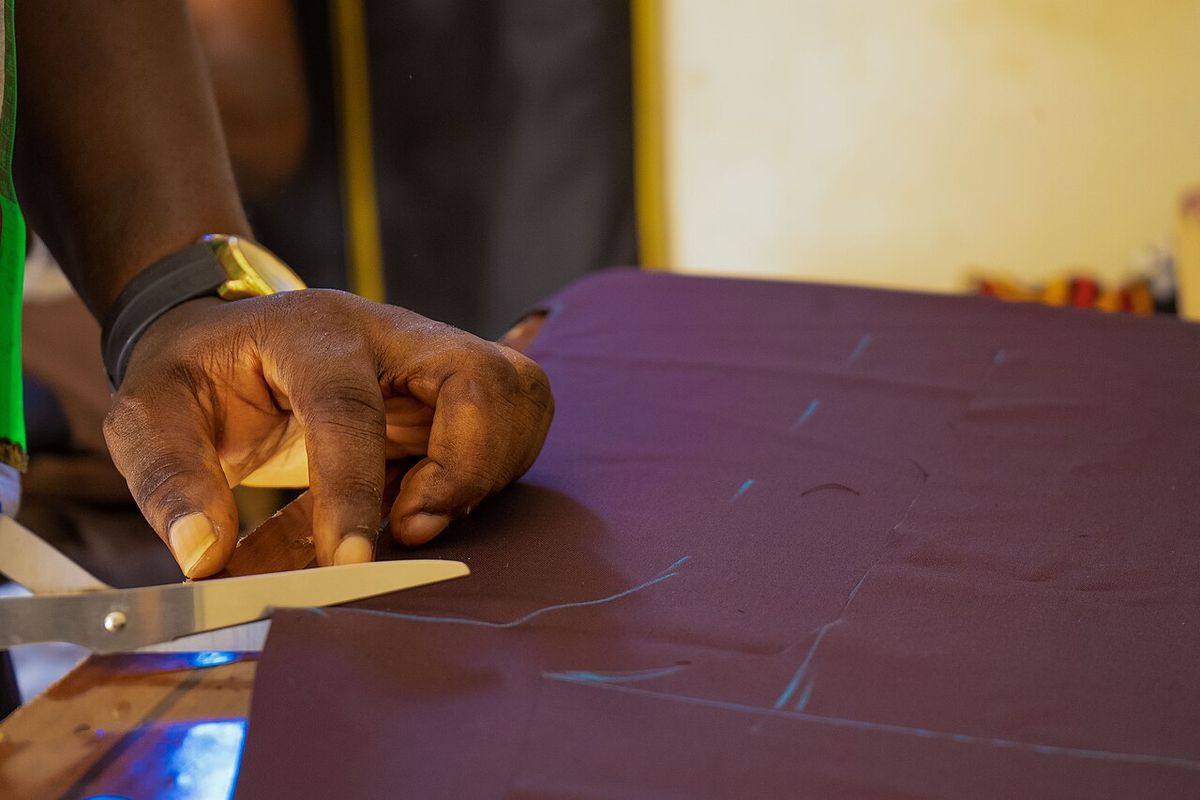
The customer and the tailor choose the cloth together, and the suit takes shape over a series of fittings.
Bespoke and made-to-measure
The Savile Row Bespoke Association, a group of tailors on and around Savile Row in London, keeps a list of tailoring terms. It describes a bespoke suit as one made on or around Savile Row to the customer's specifications, from a pattern made for that customer.
The same list describes made-to-measure as a garment made to a customer's individual requirements to some extent, but not necessarily by hand. Ask a tailor which of the two they are offering, and what that means for the pattern and the fittings.
The pattern and the fittings
The association says every bespoke garment made by its members has its own handmade pattern, cut by a master cutter. Its list of terms says a bespoke suit takes at least 50 hours of hand work and needs a series of fittings.
At the first fitting, the suit may be a baste, which the association's list describes as a garment roughly put together. The list also names the balance, the back and front lengths of a jacket, which the tailor adjusts to suit the wearer's posture.
The association says its members' coats have inlays, extra cloth left in the main seams so they can be adjusted later. Ask a tailor whether a suit will have room to be let out or taken in over the years.
Choosing the cloth
The association says pure British wool remains the staple cloth for its tailors, and that pure or blended cashmere, mohair and angora are used as well.
The Campaign for Wool says wool comes in a range of weights, from a lightweight summer suit to an overcoat for winter. It also says wool has natural stretch, drape and resistance to wrinkles.
Ask to see a sample of the cloth before it is ordered, and keep a note of which one was chosen.
Caring for a tailored suit
English Heritage's tips on clothes moths suggest checking under collars, behind lapels, in pockets and in trouser turn ups. They say moths go for clothing soiled with food, and that clothes should be clean when they are put away in a wardrobe or a box.
The same tips suggest taking out and shaking clothes that hang in a wardrobe at least once a month, because moths dislike being disturbed.
The association asks its members to offer aftercare, including sponging, pressing, repairs and button matching. Ask any tailor what aftercare comes with a suit.
Your rights when a suit is made to order
Across the UK, the Consumer Rights Act 2015 treats a contract for goods that are to be made and then supplied to a consumer as a sales contract. Section 9 of the Act says the goods must be of satisfactory quality, and it lists appearance, finish and durability among the aspects of quality.
Section 13 of the Act says that where goods are supplied by reference to a sample the consumer has seen, they must match the sample, unless any differences were pointed out before the contract was made.
The Consumer Contracts Regulations 2013, read on legislation.gov.uk on 8 November 2026, give a 14 day right to cancel some contracts made at a distance or away from the trader's premises. Regulation 28 says that right does not apply to goods made to the consumer's specifications or clearly personalised.
Useful links
- Consumer Rights Act 2015, section 9: goods to be of satisfactory quality (legislation.gov.uk)
- Consumer Rights Act 2015, section 13: goods to match a sample (legislation.gov.uk)
- Consumer Contracts Regulations 2013, regulation 28 (legislation.gov.uk)
- Changing your mind about something you've bought (Citizens Advice)
- Top tips for preventing clothes moth infestations (English Heritage)
- Tailoring terms (Savile Row Bespoke Association)
- Cloth (Savile Row Bespoke Association)
- Wool facts (The Campaign for Wool)